

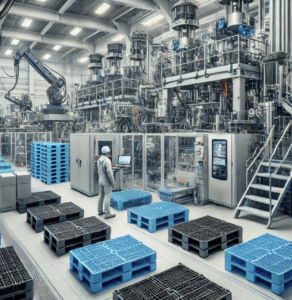
Plastic pallet manufacturing is a serious, operationally complex business. Tooling, resin pricing, quality control, freight, warehousing, and customer requirements don’t leave much room for guesswork. That’s exactly why digital marketing matters. It’s not “extra.” It’s the system that helps your production capacity stay booked, your sales pipeline stay predictable, and your brand stay visible in a market where buyers increasingly research, compare, and shortlist vendors online long before they ever pick up the phone.
Digital marketing isn’t about chasing attention. It’s about building demand you can measure—so your team can stop relying only on referrals, cold outreach, or “we’ve always done it this way” relationships and start capturing the buyers who are already searching for plastic pallet solutions every day.
Your Market Is Already Online—Even in B2B
Purchasing managers, warehouse directors, supply chain teams, and operations leaders are doing what everyone else does now: they research first. They look for specs, compliance notes, durability claims, cleaning requirements, lead times, recycled-content options, and proof that a vendor is stable and responsive. Digital marketing makes sure your company shows up during that research phase—before the buyer forms a shortlist.
This shift is accelerating as the digital ad industry grows and platforms keep improving targeting, measurement, and automation. The IAB/PwC Internet Advertising Revenue Report shows digital advertising continuing to expand at massive scale, which is a practical signal: more of your competitors and buyers are operating in digital channels because that’s where attention and decision-making now live. Here’s the report overview: IAB Internet Advertising Revenue Report: Full Year 2024.
Digital Marketing Turns “Capability” Into “Confidence”
Plastic pallets are not an impulse purchase. They’re a risk-management decision. Buyers want fewer product losses, fewer safety issues, fewer sanitation problems, fewer damaged pallets, and fewer supply interruptions. Your job in marketing is to translate what you already do well into proof that reduces buyer uncertainty.
That means clearly presenting:
-
Load ratings and racking strength guidance
-
Hygiene and washdown benefits
-
Consistency vs. wood variability
-
Nestable/stackable logistics efficiency
-
Lifecycle cost advantages
-
Recycled-content and sustainability positioning
-
Industry-fit (food & beverage, pharma, chemical, automotive, export, cold storage)
Digital marketing gives you the channels and content formats to deliver that story in a way that buyers can absorb quickly and trust.
Search Visibility Captures High-Intent Buyers
When someone types “plastic pallets for food grade,” “rackable plastic pallets,” “export pallets ISPM-15 alternative,” or “recycled plastic pallets supplier,” that buyer is not browsing—they’re shopping. Search visibility is one of the highest leverage plays for manufacturers because it captures demand that already exists.
A strong strategy combines:
-
Search engine optimization (product pages + industry pages + application pages)
-
Paid search for urgent or competitive terms
-
Local/region-based visibility for “near me” and distribution-friendly markets
-
Conversion pathways (RFQ forms, spec downloads, quick quote requests, call tracking)
Google continues rolling out ad and measurement updates that make it easier to reach buyers across discovery-to-decision moments, especially with AI-supported campaign improvements. This matters because it lowers the friction to scale what works once your baseline funnel is in place. See Google’s official updates here: Google Ads new features & announcements.
The Future of Buying Is More “AI-Driven” Than Most Manufacturers Think
Search and shopping experiences are shifting fast. Google has been pushing more AI-assisted discovery and commerce experiences, including new ways to surface personalized offers and buying actions inside AI shopping flows. Whether you love that or not, it’s a directional sign: digital ecosystems are compressing the time between “research” and “purchase.” If your product catalog, proof points, and offers aren’t digitally accessible and persuasive, you get skipped.
For a plastic pallet manufacturer, this creates a clear advantage for companies that:
-
Publish clear specs and use-case pages
-
Maintain clean product data and imagery
-
Offer easy quote pathways
-
Retarget site visitors and RFQ abandoners
-
Build authority content that answers real buyer questions
Digital Marketing Stabilizes Sales Cycles and Reduces Price Pressure
When your pipeline depends on a narrow set of repeat accounts, price becomes a constant battle. When you add steady inbound leads—qualified by industry, pallet type, and application—you gain negotiating power. You can choose better-fit clients, maintain margins, and keep your plant running with less volatility.
Digital marketing also helps you pre-sell value before a sales conversation ever happens. When buyers consume your content first, they arrive with context: they understand why your pallet costs what it costs, and they’re less likely to treat you like a commodity.
Content Marketing Makes Your Sales Team Faster
Manufacturing sales often repeats the same explanations: “Why plastic instead of wood?” “What about racking?” “Can you do recycled content?” “How do I calculate ROI?” “What’s the lead time?” “Do you have case studies?”
Content turns those repeated answers into scalable assets:
-
“Plastic vs. wood pallet lifecycle cost” breakdowns
-
ROI calculators or simple cost-of-failure explanations
-
Industry-specific pages (cold storage, food processing, pharma distribution)
-
Compliance and hygiene content
-
Case studies and before/after operational outcomes
-
Spec sheets and comparison tables
This is not fluff. It shortens sales cycles, improves close rates, and reduces the time your team spends educating from scratch.
If you want a clean baseline definition and context for the discipline itself, this reference helps anchor the terminology: Digital marketing (Wikipedia).
Social and Creator Ecosystems Influence B2B More Than You’d Expect
B2B buyers still scroll. They still watch short-form videos. They still follow industry pages. They still notice who looks “alive” and credible online. A manufacturer that shows consistent proof—plant capability, QA processes, real shipments, real inventory, real teams—wins trust faster.
Meta and other major platforms are also making it easier for brands to scale performance using AI tools and partnership/creator workflows. Even if you never work with a creator, these platform shifts matter because they improve targeting, ad formats, and performance optimization—useful for recruiting distributors, attracting procurement teams, and expanding awareness in new regions. Here’s one recent example of platform-side updates: Marketing Dive – Meta streamlines brands’ creator partnerships with AI-powered updates.
Your Website Is Either a Sales Rep or a Liability
In manufacturing, a weak website does more damage than people realize. If your site is thin, outdated, slow, or unclear, you trigger doubt: “Are they established?” “Can they deliver?” “Do they have the pallet type we need?” “Will they respond?”
Digital marketing forces the right upgrades:
-
Clear product categories and application mapping
-
Strong photography and plant credibility signals
-
RFQ and “talk to sales” conversion points
-
Location/service coverage clarity
-
Fast load speeds and mobile usability
-
Proof: certifications, customers served, testimonials, case studies
-
Tracking: calls, form fills, quote requests, source attribution
When this is done well, your website becomes your best 24/7 sales rep. When it’s done poorly, it becomes the reason you never hear from the best-fit buyers.
Measurement Gives You Control Instead of Hope
The biggest reason digital marketing wins long-term is measurement. You can see:
-
What channels produce quotes
-
Which pages convert best
-
Which industries respond fastest
-
What geography is heating up
-
Which offers trigger action
-
What your true cost per lead is
-
How lead quality changes over time
Google’s continuing ad and measurement evolution is heavily focused on automation and better decisioning, which is another signal that performance marketing is becoming more accessible—if you build a solid foundation first.
Digital Marketing Protects You in a Changing Competitive Landscape
Even if you have strong relationships today, markets change: new entrants, resin swings, freight disruptions, consolidation, and shifting buyer requirements. Digital marketing creates resilience. It diversifies lead sources and reduces the risk of a few accounts controlling your year.
It also gives you the ability to launch new product lines faster (nestable, rackable, export-ready, recycled-content, anti-slip decks, hygienic designs) because you can immediately market them, test messaging, and find demand pockets instead of waiting for word-of-mouth momentum.
Conclusion: Digital Marketing Is Capacity Insurance—and Growth Fuel 🚚✨
Plastic Pallet Manufacturers don’t need digital marketing to “look cool.” You need it to stay visible, stay trusted, and stay in control of your pipeline. It turns your operational strength into market confidence. It captures high-intent search demand. It shortens sales cycles with content. It improves margins by reducing commodity pressure. It gives you measurable growth levers in a world where buyers increasingly choose vendors online before they ever speak to sales.
If your goal is steady production, stronger margins, and a pipeline that doesn’t depend on luck, digital marketing is one of the smartest investments you can make—because it keeps your plant fed with demand, not hope.