

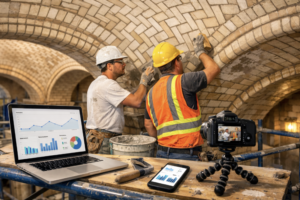
Pittsburgh Guastavino Tile Repair & Restoration is a highly specialized service. It is not a broad, everyday construction category where people casually compare dozens of providers. It sits in a rare intersection of historic preservation, architectural craftsmanship, masonry knowledge, and restoration strategy. That alone is exactly why digital marketing matters so much.
A company working in this niche cannot rely only on referrals, old relationships, or the hope that the right architect, church board, preservation committee, facilities manager, or property owner will somehow hear about them at the right time. In today’s market, trust is searched online before it is ever given in person. Decision-makers look for proof, project examples, credibility signals, location relevance, and industry understanding before they ever pick up the phone. In a city like Pittsburgh, where historic structures, religious buildings, and legacy architecture remain a visible part of the urban identity, a Guastavino tile repair and restoration company needs digital marketing to make its expertise visible, credible, and easy to find. Pittsburgh’s long-standing media and communications footprint also reinforces how important visibility has always been in the region’s business culture, which is part of why modern online positioning now matters so much. See Wikipedia’s overview of Pittsburgh and Wikipedia’s overview of media in Pittsburgh.
Digital marketing helps a highly specialized company get found by the right people
Most people are not typing “tile repair” when they need Guastavino work. They are searching phrases tied to a problem, a building type, a location, or a restoration objective. They may search for historic ceiling restoration, vaulted tile repair, church dome restoration, preservation contractors in Pittsburgh, architectural tile restoration, or masonry restoration for heritage buildings. Some may not even know the word Guastavino when they begin looking.
That is where digital marketing becomes essential. A strong online presence allows a restoration company to rank for the exact language real buyers use, not just the internal terminology of the trade. Search engine optimization, location pages, educational service pages, and well-written project content give a company multiple entry points into search results. Instead of waiting for people who already know the niche, digital marketing brings in architects, church leaders, engineers, preservation consultants, and property stakeholders who are trying to solve a real problem but need help understanding who is qualified to handle it.
For a Pittsburgh Guastavino Tile Repair & Restoration company, this is especially valuable because the local market contains older churches, institutional buildings, and architecturally significant properties that require more than generic repair work. The people responsible for those structures need to find a firm that clearly communicates restoration knowledge, not just construction capability.
Trust is the real product before restoration work is ever sold
In a niche like this, the service is not the first thing being purchased. Trust is. Before a contract is signed, the client is asking silent questions. Does this company understand historic materials. Have they worked on sensitive structures. Can they speak to preservation concerns without sounding vague. Do they understand that repairing a church interior or historic vaulted system is different from standard commercial patchwork.
Digital marketing answers those questions before the first conversation. A well-built website with restoration-focused content, case studies, photography, process explanations, and location authority builds confidence. Consistent branding across search results, directories, maps, industry content, and social platforms makes a company feel established. Educational content helps buyers feel informed rather than pressured. That matters because buyers in this space are often cautious. They are responsible for buildings that carry historical, structural, financial, and emotional weight.
Pittsburgh’s own marketing and communications ecosystem continues to highlight how important strong storytelling and strategic visibility are for business growth. Local marketing organizations are actively discussing modern value creation, while regional business coverage continues to show how communications and marketing shape reputation in a changing digital environment. See AMA Pittsburgh’s 2026 marketing trends discussion and the Pittsburgh Post-Gazette’s coverage of a local communications firm thriving through the shift in marketing and PR.
A niche restoration company cannot afford to look invisible online
One of the biggest mistakes specialized contractors make is assuming that being excellent at the work is enough. Excellence matters, but invisibility kills growth. If a company has deep restoration capability but a weak website, poor local SEO, no project content, thin service pages, and little authority online, then it is forcing potential clients to take a leap of faith.
That leap rarely happens anymore.
Architects and consultants vet contractors online. Church boards look at websites before meetings. Property committees review options by searching local providers. Even referrals are now verified digitally. Someone may hear your name through a trusted source, but then they search you immediately. If they find a dated site, no useful content, weak imagery, inconsistent business information, or nothing that demonstrates Guastavino-specific understanding, confidence drops fast.
Digital marketing closes that gap. It makes a company look as capable online as it is in the field. That means stronger service pages, polished before-and-after galleries, optimized Google Business content, articles that explain repair vs. replacement, and pages that speak directly to churches, preservation stakeholders, and historic property managers.
Churches and historic institutions need education, not just advertising
For a Pittsburgh Guastavino Tile Repair & Restoration company, digital marketing is not just about promotion. It is about education. Many buyers do not fully understand what Guastavino tile is, why it matters, what risks come with poor repairs, or why specialized restoration is worth the investment. That creates an opportunity.
Content marketing can position the company as the guide, not just the vendor. Blog articles, service pages, downloadable resources, and project writeups can explain the significance of historic tile systems, the consequences of deferred maintenance, the difference between cosmetic fixes and preservation-minded repair, and the long-term value of proper restoration planning.
This matters for churches in particular. Many church leaders are not restoration experts. They are stewards of a building, a congregation, a budget, and a legacy. They need someone who can explain things clearly and respectfully. Digital marketing gives a company a platform to do that before a sales call ever happens. It allows the business to become a trusted source of information, which strengthens both lead quality and close rates.
Local SEO gives specialized restoration firms a practical growth advantage
A Pittsburgh-focused restoration company needs to own its local digital footprint. That includes its website, map presence, directory consistency, local citations, reviews, image optimization, and geographically relevant content. When someone searches for a restoration-related solution in Pittsburgh, the company should appear with confidence and authority.
Local SEO is powerful because it connects expertise with geography. A firm may be highly skilled, but if search engines do not clearly understand where it works and what it does, it will not show up consistently in the moments that matter. Digital marketing solves that by aligning content with local intent. Pages can target Pittsburgh churches, Pittsburgh historic buildings, Pittsburgh restoration services, and surrounding-area preservation needs without sounding forced or repetitive.
A restoration company that builds strong local relevance can often outperform larger but less specialized competitors. That is a major advantage. The goal is not to look like everyone else in construction. The goal is to own a narrow, high-value category in a defined market.
Digital marketing supports reputation, partnerships, and long-term authority
This type of company does not only need end clients. It also needs referrals from architects, preservation consultants, engineers, facility leaders, and related contractors. Digital marketing helps strengthen those referral pathways by making the business easier to trust and easier to recommend.
When industry partners send someone to a company website, they want that company to look credible. They want to see technical understanding, quality imagery, clear writing, and proof of experience. A weak online presence can quietly damage referral opportunities. A strong one can multiply them.
That is where domain authority, citation strength, and trust signals matter. The more a company is connected to relevant local and industry conversations, the stronger its digital footprint becomes. Pittsburgh’s tech and business ecosystem continues to emphasize innovation, visibility, and digital growth, which reflects the broader environment that businesses now operate in. The region’s tech organizations are highlighting AI, digital tools, and communications strategy as part of how companies stay competitive. See the Pittsburgh Technology Council’s coverage of CES 2026 and its Marketing Mash Up event focused on AI tools and tactics.
Content builds authority that paid ads alone cannot replace
Paid advertising can be useful in some industries, but for a restoration niche this specialized, content is often the stronger long-term asset. Why. Because content compounds.
A well-written article about church ceiling restoration in Pittsburgh can continue attracting search traffic. A project page about preserving historic tile arches can rank and build trust over time. A guide explaining the value of restoration over replacement can help a church board make a better decision months after it is published. This kind of content does more than generate traffic. It creates authority.
That authority can also attract media attention, backlinks, and industry relevance, which strengthen the overall SEO profile of the website. In other words, digital marketing is not just a lead generation tool. It is an asset-building system. It increases how visible, trustworthy, and referable the company becomes over time.
Regional innovation coverage also shows that Pittsburgh businesses are operating in a fast-evolving environment shaped by technology, growth, and digital attention. Technical.ly has recently highlighted both startup momentum and the creator economy in Pittsburgh, underscoring how visibility, audience connection, and digital presence continue to shape opportunity in the region. See Technical.ly’s report on Pittsburgh startups to watch in 2026 and its piece on the creator industry’s growing impact in Pittsburgh.
Digital marketing protects the value of a premium service
Guastavino tile repair and restoration is not bargain-basement work. It is specialized, skilled, and detail-driven. Companies in this space should not market themselves like commodity contractors. Digital marketing helps protect premium positioning by framing the service correctly.
The right website language, visuals, educational content, and search strategy communicate that this is a specialized restoration discipline requiring care, historical respect, and technical ability. That positioning attracts clients who understand value. It filters out poor-fit leads looking only for the cheapest option. It also gives the company stronger language around quality, preservation, and long-term stewardship.
A business that fails to market itself digitally often ends up underselling itself. It becomes harder to explain why its pricing is justified because the online brand does not carry the weight it should. Digital marketing fixes that by aligning perception with reality.
Conclusion
A Pittsburgh Guastavino Tile Repair & Restoration company needs digital marketing because rare skill alone is not enough in a search-first world. The right people need to be able to find the company, understand what makes it different, trust its expertise, and feel confident reaching out. Digital marketing makes that happen.
It helps the company rank for meaningful searches, educate churches and historic property stakeholders, build authority with architects and consultants, strengthen local visibility, and protect premium positioning. It turns specialized knowledge into visible market presence. It transforms quiet craftsmanship into trusted demand.
In a city like Pittsburgh, where heritage buildings still matter and digital visibility increasingly shapes business growth, a restoration company that invests in digital marketing is not chasing attention. It is building the kind of credibility that helps preserve both historic structures and the future of its own business.